
Saving Little Lives with Clean Hands: Inside CHAMPS’ Drive to Strengthen Infection Control in Bauchi Hospitals
By Ahmed Ahmed
In the quiet but highly sensitive wards where newborns fight for survival and young children are treated for life-threatening illnesses, invisible enemies often pose the greatest danger. Infections picked up within health facilities, many of them preventable, continue to claim the lives of thousands of children across Nigeria every year.
In Bauchi State, a renewed effort is underway to confront this challenge head-on, placing something as simple, yet powerful, as clean hands at the centre of child survival.At the College of Medical Sciences, Abubakar Tafawa Balewa University (ATBU), Bauchi, the Child Health and Mortality Prevention Surveillance (CHAMPS) Programme had a three-day capacity-building training on Infection Prevention and Control (IPC) for 30 frontline healthcare workers.

Drawn from the Special Care Baby Unit (SCBU) and the Emergency Paediatric Unit/Early Pregnancy Unit (EPU) of Abubakar Tafawa Balewa University Teaching Hospital (ATBUTH), as well as the Specialist Hospital, Bauchi, the participants represent those working closest to the most vulnerable patients newborns, children, and pregnant women.
The training, which began on Monday in Bauchi, focuses on the foundations of IPC, with particular emphasis on hand hygiene, healthcare waste management, and other standard precautions critical to patient safety.
For CHAMPS, the initiative is not just another workshop, but part of a broader mission to reduce preventable child and neonatal deaths through evidence-based interventions and strengthened health systems.
Opening the programme, Dr. Abubakar Sari, Lead Data-to-Action Officer of the CHAMPS Project for the Bauchi Catchment Area, painted a sobering picture of the burden of infections in healthcare settings.
He expressed concern over the persistently high rates of infections, especially among children under five years of age, noting that hospital-acquired infections remain a major contributor to morbidity and mortality in paediatric and neonatal care.
“Many of the children we lose are not just battling their original illnesses,” Dr. Sari explained.
“They are also exposed to infections they acquire while receiving care. These are infections that can be prevented if the right measures are consistently applied.”
According to him, the objectives of the training include introducing participants to the goals of the CHAMPS programme, aligning expectations, and assessing baseline knowledge of IPC practices among healthcare workers.
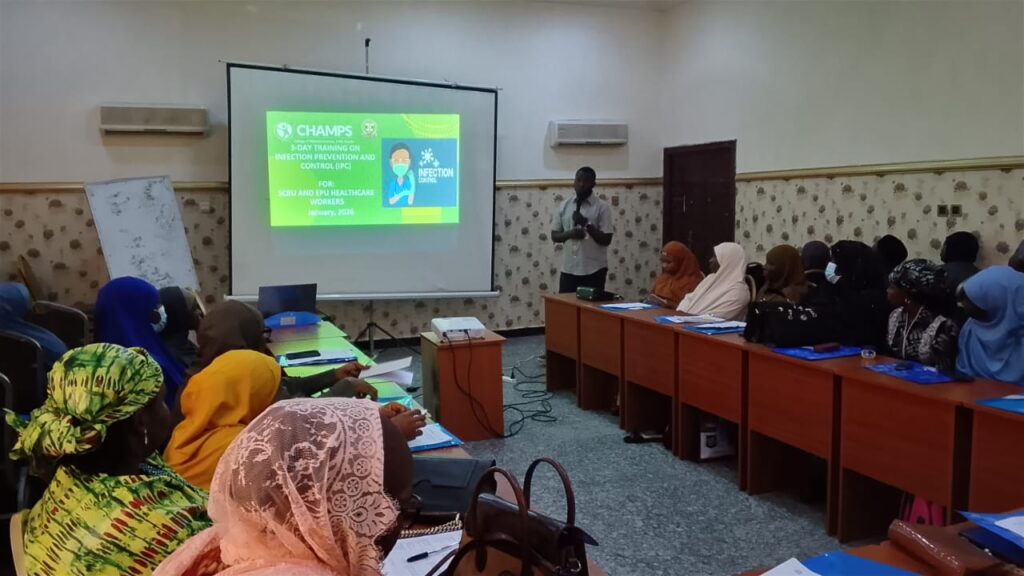
Beyond theory, the sessions are designed to strengthen understanding of infection transmission routes, highlight the impact of healthcare-associated infections (HAIs), and equip participants with practical strategies they can apply immediately in their daily clinical work.
A major pillar of the training is hand hygiene often described by global health experts as the single most effective way to prevent the spread of infections in healthcare facilities.
During one of the sessions, facilitator and ATBU lecturer, Dr. Sani Giade, delivered a strong message to participants, describing proper hand hygiene as a lifesaving tool, particularly in high-risk units such as SCBUs and emergency paediatric wards.
“Hand hygiene is not optional,” Dr. Giade told the participants. “In places where newborns and critically ill children are treated, it is a matter of life and death.
A single missed opportunity to clean hands can lead to an infection that a fragile baby may not survive.
”He noted that poor hand hygiene among healthcare workers remains a leading cause of HAIs, resulting in prolonged hospital stays, increased medical costs, and preventable deaths.Simple practices such as correct handwashing techniques, adherence to the ‘five moments’ of hand hygiene, and the proper use of alcohol-based hand rubs can drastically reduce infection transmission when followed consistently.
The training blends classroom lectures with practical demonstrations, allowing participants to practice correct techniques and discuss real-life challenges they face in busy hospital environments.
For many attendees, the interactive approach reinforced the importance of translating knowledge into daily habits.Beyond hand hygiene, the programme also addressed another often overlooked but critical aspect of infection control: hospital waste segregation.

Dr. Sadiq Abubakar, a lecturer at the College of Medical Sciences, ATBU, emphasised that improper handling of healthcare waste poses serious risks to patients, health workers, and the wider community.
He explained that waste segregation involves separating different categories of hospital waste at the point of generation, ensuring that hazardous materials are handled, treated, and disposed of safely.
“If waste is not properly segregated, it increases the risk of infections and environmental contamination,” he warned.
“The responsibility starts with healthcare workers, because they are the ones generating the waste.
”Dr. Abubakar outlined the key stages of healthcare waste management—from identifying types of waste and segregation, to collection, storage, transportation, treatment, and final disposal.
He stressed that each stage must be carefully implemented, especially in paediatric and maternal care settings where patients are highly vulnerable.
One of the most striking moments of the training came during a presentation by Dr. Sani Abdulkakareem, who shared evidence highlighting the scale of the problem.
Citing a 2025 systematic review and meta-analysis by Onwuliri et al., he revealed that approximately 16 out of every 100 patients in Nigerian hospitals develop infections during hospital admission.
The study, which analysed data from about 86,800 patients, found that urinary tract infections accounted for roughly one-third of HAIs, followed by surgical site infections, and skin and soft tissue infections.
The most commonly implicated bacteria, he said, include Proteus species, Staphylococcus aureus, Escherichia coli, Klebsiella species, and Pseudomonas organisms that thrive where infection control practices are weak.
For participants, the statistics were both alarming and motivating.
Many acknowledged that while the challenges are significant, most HAIs are preventable through strict adherence to IPC protocols, adequate supplies, and continuous training.
At the closing session, health workers jointly called on governments at all levels to improve funding and provide essential IPC equipment in health facilities.
They stressed that without reliable access to gloves, hand rubs, running water, waste disposal materials, and functional infrastructure, even the best training would have limited impact.
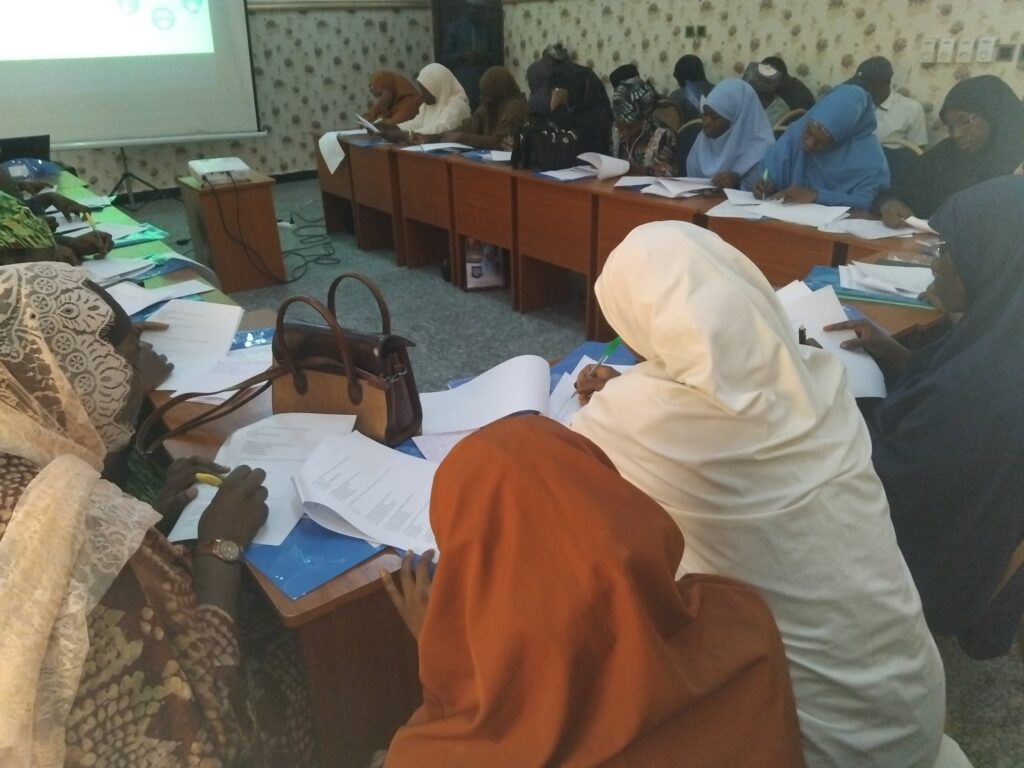
One participant, Dr. Fadimatu Bindow, said the training had deepened her understanding of infection transmission and reinforced the role of frontline workers in protecting patients.
“We now have better practical strategies, but we also need support,” she said.
“With the right tools and commitment, we can significantly reduce infections among newborns and children.
”As the training concluded, CHAMPS Programme officials expressed optimism that strengthened IPC practices would translate into safer hospitals and better outcomes for children in Bauchi State.
In wards where survival often depends on the smallest details, the message is clear: clean hands, proper waste management, and sustained commitment can save lives—one patient at a time.
