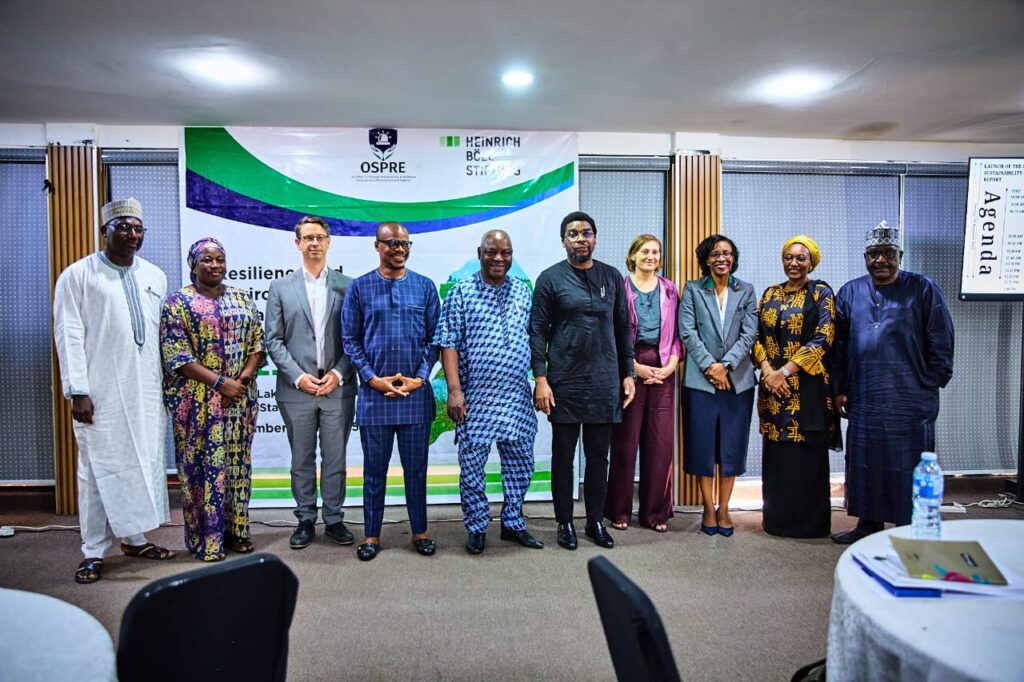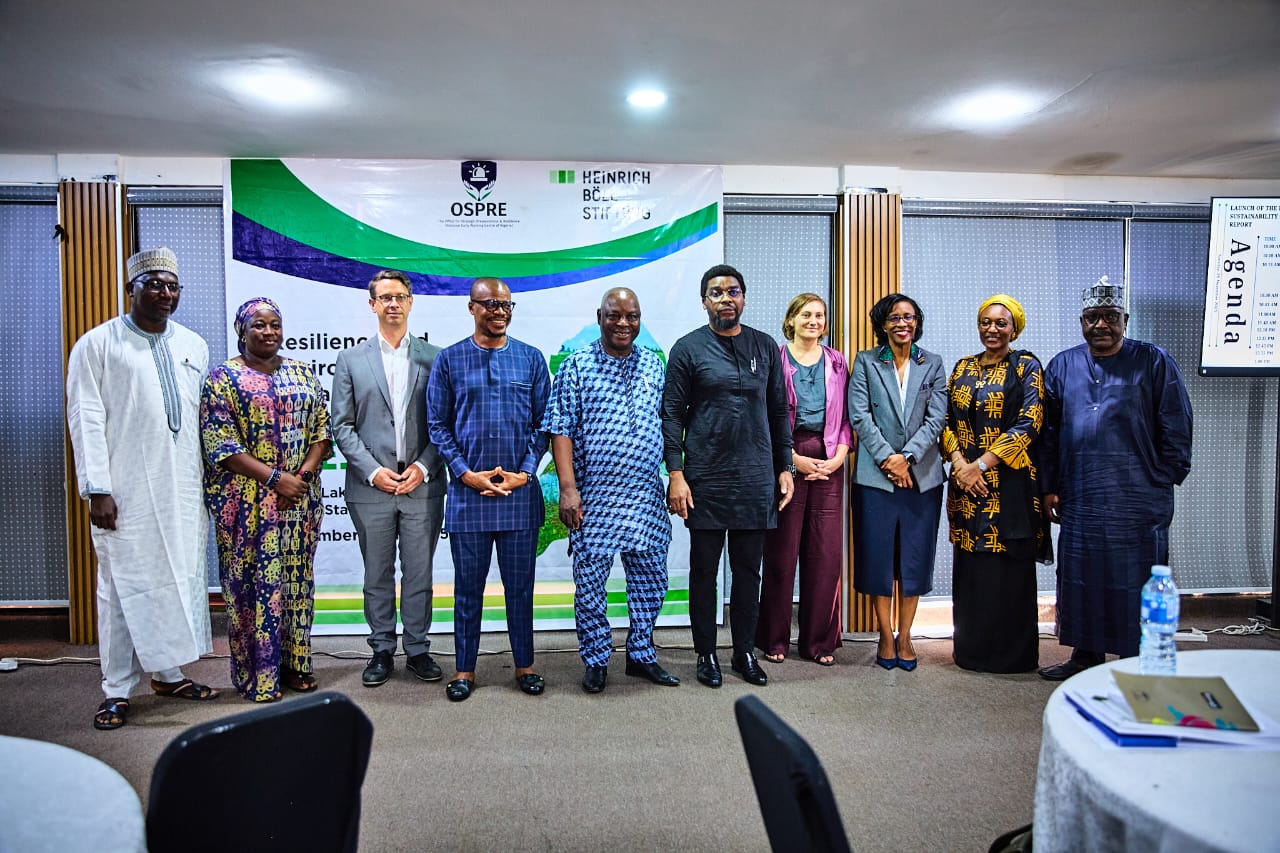
FG Launches Report To Strengthen Climate Resilience In Resettled Enclaves
By Najib Sani, Gombe
The Federal Government on Tuesday launched a groundbreaking study aimed at addressing the devastating impact of climate change on internally displaced persons (IDPs) in the conflict-ridden North East region.
The report tagged ‘Resilience and Environmental Sustainability of Resettled Enclaves’ (RESTORE) project report highlights the urgent need for multidimensional measures to tackle environmental degradation, livelihood restoration, and water resource management in the Lake Chad Basin, one of the most vulnerable areas in terms of ecological and security problems.
According to the Communications Manager for OSPRE, Amina Wali, the report was a collaborative effort between the Office for Strategic Preparedness and Resilience (OSPRE) and the Heinrich Böll Foundation adding that it provides critical evidence on how climate change is exacerbating conflict and displacement in the region.
“The study aims to support ongoing recovery efforts in Nigeria’s conflict-affected North-East region, particularly within internally displaced populations (IDPs) and resettled communities confronting climate-driven vulnerabilities”, she said.
She quoted the Country Director of the Heinrich Böll Foundation, Sophie von Knebel during the launching as underscoring the urgency of addressing the climate–conflict nexus in the Lake Chad region.
“Climate change is no longer a distant threat for communities in the Lake Chad Basin—it is their daily reality. This report offers critical, grounded evidence on how environmental degradation is compounding fragility, displacement, and insecurity.
The Heinrich Böll Foundation is proud to support this work, which will help policymakers, humanitarian actors, and communities chart a more sustainable and resilient future”, the country director said.
In his remarks, Mr Chris Ngwodo, Director General of OSPRE, emphasised the national significance of the study.
“The RESTORE Project represents an essential step toward understanding how climate shocks, environmental pressures, and conflict dynamics intersect to shape displacement and resettlement patterns in the North-East.“
“Our goal at OSPRE is to ensure that government and civil society actors have the evidence and tools they need to build resilient communities, strengthen preparedness, and support the long-term recovery of this region. We are grateful for the collaboration with the Heinrich Böll Foundation, whose partnership has made this work possible”, he stated.
While presenting the findings of the study, the Lead Researcher, Murtala Abdullahi, stressed the need to implement interdisciplinary and multidimensional measures that combine reforestation, livelihood restoration, effective water resource management, transitional justice and disarmament with military operations.
In his keynote address, Professor Sunday Ochoche called for concerted efforts to ensure that resettlement initiatives are sustainable in the long term.
The RESTORE project report, according to them, would support ongoing national strategies on climate security, environmental sustainability, and durable solutions for displaced persons.